
General Purpose — 600 Series
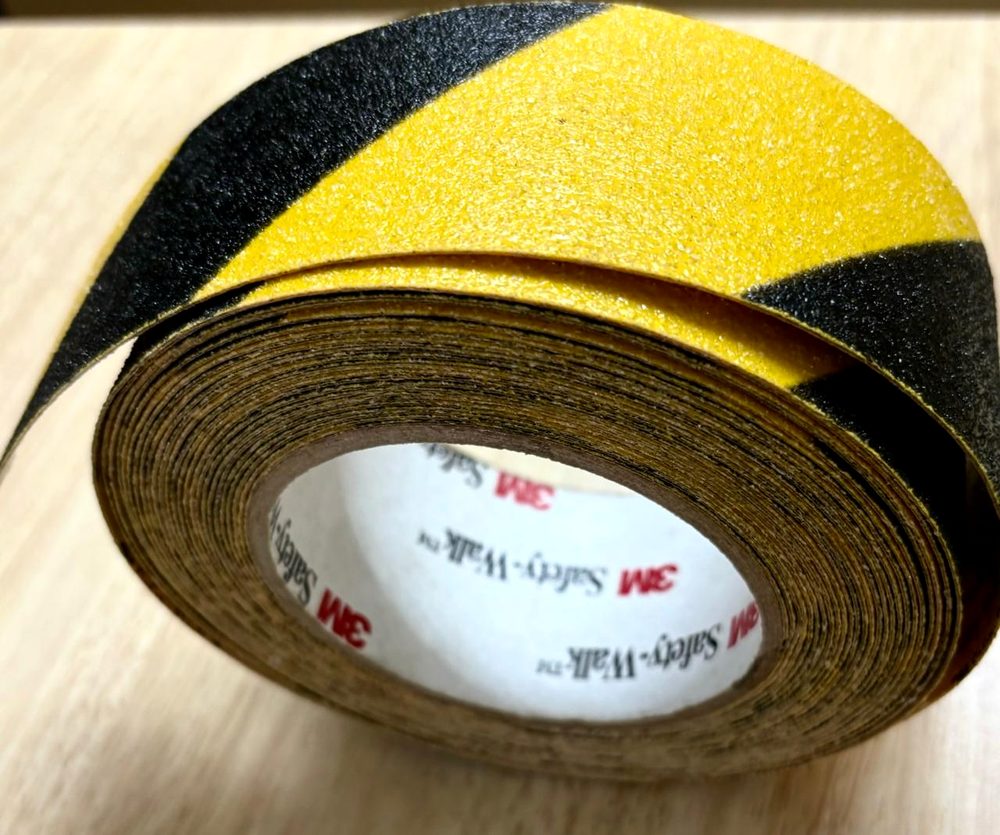
The default for stairs, ramps, walkways and platforms in shoe-traffic areas. Mineral-coated, aggressive texture, high durability. This is what most industrial and commercial stair treatment specifies.
Slips and falls are among the most common causes of workplace injury, and almost all of them happen in places you can identify in advance — stairs, ramps, wet transitions, loading bays and plant walkways. 3M Safety-Walk puts measurable traction exactly where the risk sits.
The right grade depends on the surface, the footwear and whether the area is wet. Getting this wrong is the most common reason anti-skid tape fails or is uncomfortable to walk on.
The default for stairs, ramps, walkways and platforms in shoe-traffic areas. Mineral-coated, aggressive texture, high durability. This is what most industrial and commercial stair treatment specifies.

Moulds over chequered plate, grating, diamond-tread and irregular metal surfaces without bridging or lifting at the edges. Specify this for plant walkways, vehicle steps and machinery platforms.

Softer, non-mineral texture for barefoot and soft-footwear areas — pool surrounds, changing rooms, bathrooms, locker rooms and spa areas. Grips wet feet without being abrasive to skin.

Combines slip resistance with glow-in-the-dark visibility for stairwells and escape routes — the tread stays visible during a power failure or smoke condition.
A slip is rarely just an injury. It is a liability claim, an insurance conversation, a lost-time incident and, in regulated premises, an audit finding.
Stair nosings concentrate risk: the foot lands on a narrow edge, often while the person is carrying something or looking ahead rather than down. This is where anti-skid tape earns its cost first.
Kitchens, pool decks, changing rooms, food processing floors and washdown bays combine water with smooth flooring. Standard tape is the wrong product here — these need wet-area or barefoot-friendly grades.
If a slip occurs on an untreated surface that was known to be hazardous, the question becomes what you did about it. Documented anti-skid treatment is evidence of reasonable precaution.
Insurer risk surveys and internal EHS audits routinely flag untreated stairs, ramps and wet areas. Treating them closes findings cheaply.
Anti-skid tape is cheap to buy and expensive to get wrong — the wrong grade either fails to grip, lifts at the edges, or is so aggressive it is unusable barefoot. These are the questions that determine the specification.

Where we are most often asked to supply and install across Maharashtra, Goa and the rest of India.
| Sector | Typical Locations | Commonly Specified |
|---|---|---|
| Hotels & Resorts | Pool decks, spa and changing rooms, service stairs, kitchen floors | Fine Resilient 200, Medium Resilient 300, General Purpose 600 |
| Hospitals | Ramps, service stairs, wet utility areas, ambulance bays | General Purpose 600, Fine Resilient, clear grades |
| Manufacturing & Plants | Plant walkways, chequered-plate platforms, machinery steps, loading bays | Conformable 500, Coarse 700, hazard striping |
| IT Parks & Offices | Fire escape stairs, basement ramps, service corridors | General Purpose 600, photoluminescent grades |
| Transport & Fleet | Bus and truck steps, tanker walkways, rail platform edges | Conformable 500, Coarse 700 |
| Malls & Retail | Escalator transitions, service stairs, back-of-house | General Purpose 600, clear grades |
Most 3M resellers ship material and leave. We survey the site, prepare the surface, install it properly and document what was done — because that is where the customer's risk actually sits.
Free to download after a short registration.
It depends on the surface and the footwear. General Purpose 600 series suits most stairs, ramps and walkways in shoe traffic. Conformable 500 series is for chequered plate and irregular metal. Fine and Medium Resilient 200/300 series are for barefoot areas such as pool decks and changing rooms. Coarse 700 series is for heavy industrial and oily conditions. Send a photo of the surface on WhatsApp and we will tell you which grade applies.
Yes, but only the correct grades. 3M makes specific Fine and Medium Resilient constructions for barefoot and wet areas — pool surrounds, changing rooms, bathrooms and food-processing floors. These have a softer resilient texture that grips wet feet without abrading skin. Using standard mineral-coated tape in a barefoot area is a common and painful specification error.
Service life depends almost entirely on traffic volume, contamination and how well the surface was prepared. A correctly prepared stair in an office may last for years; a plant walkway under constant boot traffic and oil exposure will need replacing far sooner. Rather than quote a headline figure, we inspect and tell you honestly what to expect for your specific location.
Almost always inadequate surface preparation — dust, curing compound, oil or residual moisture under the adhesive. Sometimes it is the wrong grade for a profiled surface, where flat tape bridges the high points instead of conforming. Both are avoidable, and both are why we do the preparation ourselves rather than dropping off rolls.
Yes. Clear grades provide slip resistance while remaining nearly invisible on decorative flooring — used in hotel lobbies, showrooms and residential projects where safety yellow would be unacceptable. There is a small trade-off in visual warning, so clear grades suit places where the hazard is not the visibility but the surface itself.
Both. Material-only supply with GST invoice is available anywhere in India. We install directly across Maharashtra and Goa, and application quality is genuinely what determines whether the treatment lasts — which is why we recommend it for anything safety-critical.
Grade selection is the whole game with anti-skid tape. A photo on WhatsApp is usually enough for us to tell you which grade applies and roughly what the area will cost.